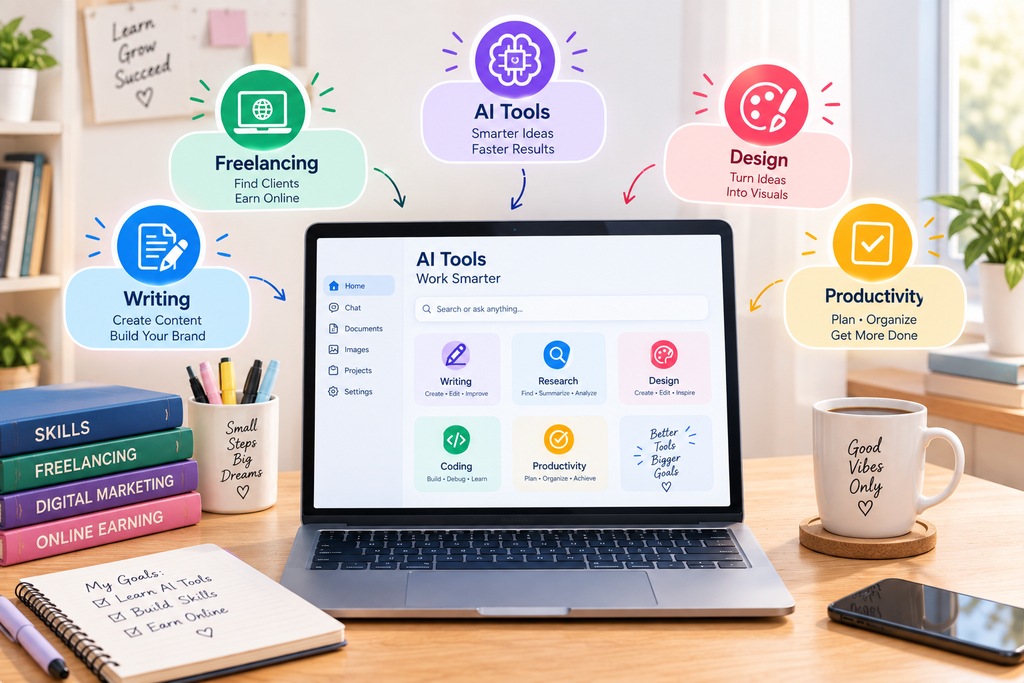
The latest AI tools 2026 are changing how people work, study, create content, and earn online. Artificial intelligence is no longer limited to simple chatbots. New AI tools are now being used for writing, research, presentations, coding, design, business tasks, and productivity.
The latest AI tools in 2026 are not only focused on generating text. Many of them are becoming complete productivity platforms where users can create documents, organize projects, work with files, build presentations, and manage several tasks from one place.
For beginners, this can be confusing because new tools and features appear almost every week. This guide explains some of the latest AI developments and how they may be useful for students, freelancers, content creators, and online workers.
What Are the Latest AI Tools 2026?
The latest AI tools are moving beyond simple chatbots. Many platforms now combine artificial intelligence with writing, research, coding, document creation, design, and business tasks.
One important trend is the development of AI agents. Instead of simply answering a question, these systems can handle several steps of a task and organize the work into a larger workflow.
Another major trend is the connection between AI and familiar software. People increasingly want AI to work inside the tools they already use instead of switching between different websites.
This makes AI more practical for beginners who want to save time without learning complicated software.
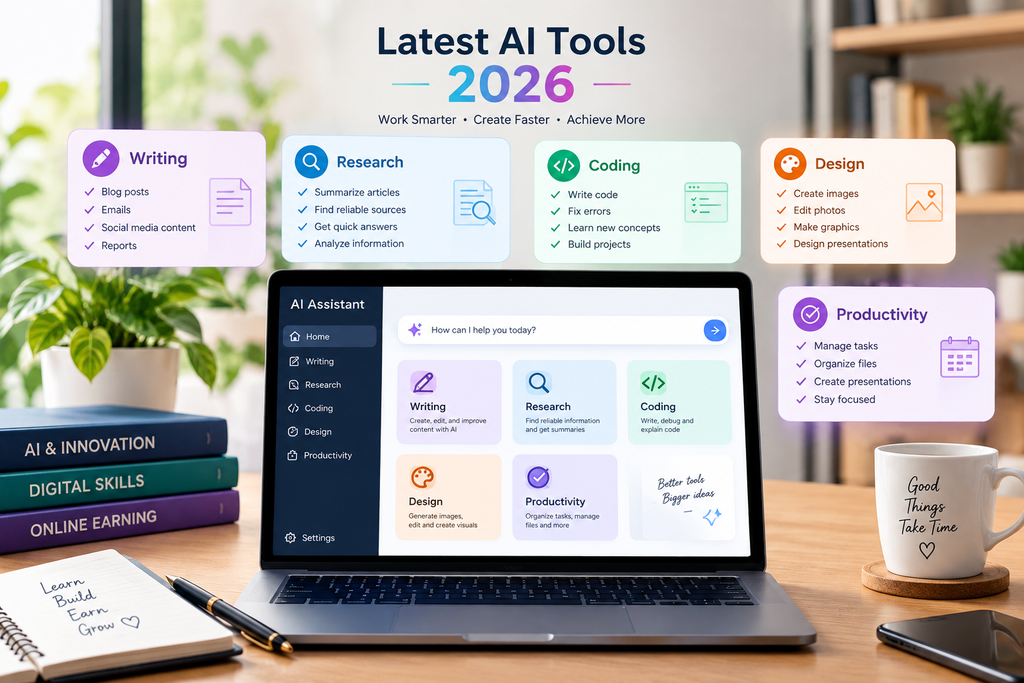
1. Claude Is Expanding Into Documents and Presentations
Claude has recently introduced Claude Docs and Slides, giving users the ability to create, edit, and collaborate on documents and presentations directly within Claude. The new features are being introduced in beta as part of Anthropic’s broader productivity changes.
This is useful for students, freelancers, researchers, and office workers who regularly prepare reports or presentations.
For example, a user could start with an idea, turn it into a structured document, make changes, and prepare presentation material without moving between several applications.
The larger trend is clear: AI assistants are becoming more than question-and-answer tools.
2. ChatGPT Is Now Available Inside Microsoft Word
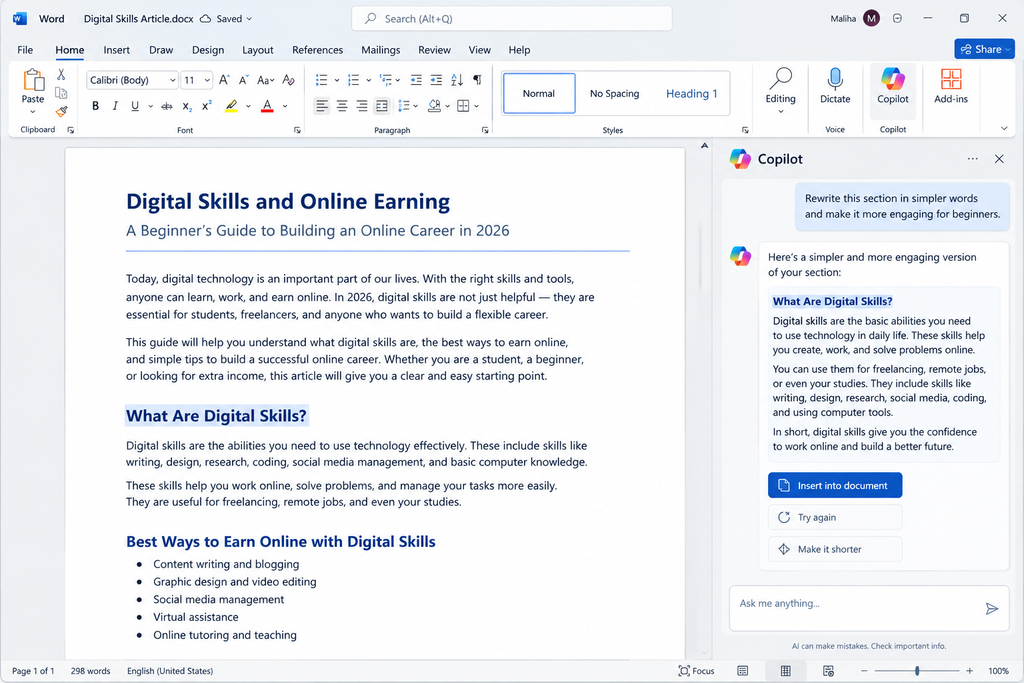
Another notable AI update is the availability of ChatGPT in Microsoft Word. According to OpenAI’s September 17, 2026 release notes, users can use the ChatGPT sidebar in Word to draft from notes, summarize documents, revise selected text, and adjust headings and formatting.
This could be particularly useful for people who already spend most of their time working in Word.
Instead of copying text into another application for every small task, users can access AI assistance while working on their document.
For students, this may help with organizing notes and improving drafts. Freelancers can use similar features when preparing documents for clients.
3. AI Tools Are Becoming More Useful for Online Work
AI is also becoming important for people who want to build online skills.
Content writing, social media management, graphic design, video production, research, virtual assistance, and customer support are some areas where AI tools can help with repetitive work.
However, AI does not automatically turn a beginner into a professional.
A person still needs to understand the skill, check the information, communicate with clients, and produce useful final work.
For example, instead of simply offering “AI content,” a freelancer could provide a specific service such as blog research, SEO content editing, social media planning, or presentation design.
4. AI Agents Are Becoming a Major Technology Trend
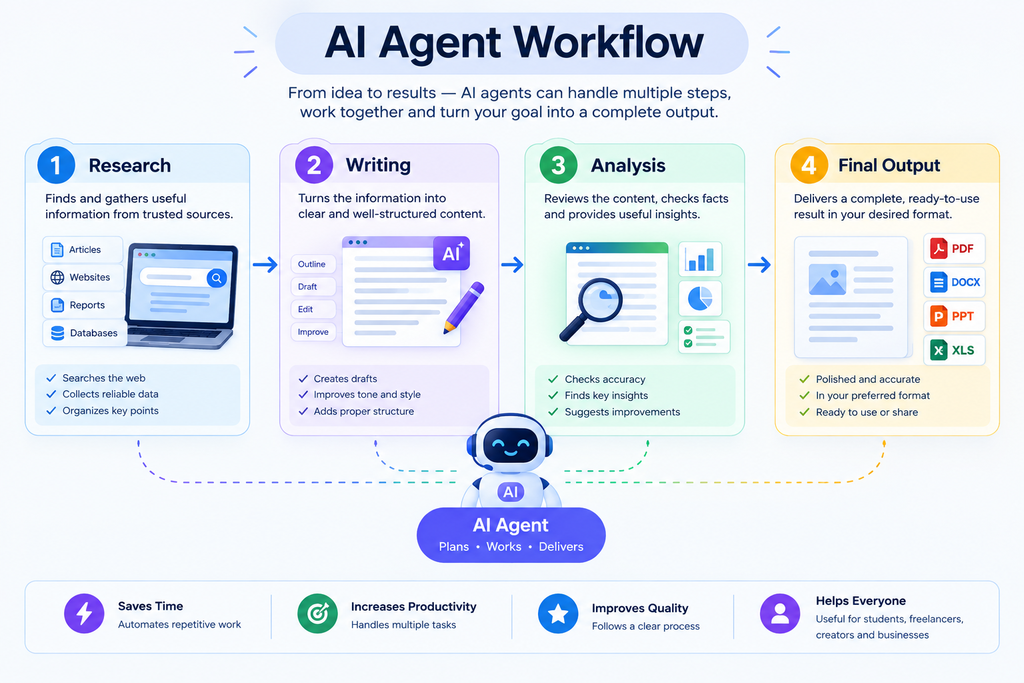
One of the biggest developments in AI is the movement toward AI agents.
Traditional AI tools often respond to individual instructions. Agent-based systems are designed to complete a sequence of tasks and work toward a specific goal.
Recent developments in tools such as Claude Code show this direction. Anthropic has introduced project-based workflows in which multiple AI agents can work on different tasks under a coordinating system.
For businesses, this could eventually reduce the amount of manual work involved in complicated digital processes.
For beginners, the important thing is not to learn every AI agent immediately. Understanding what these systems can do and where they are useful is a better starting point.
5. AI Is Moving Into Specialized Industries
Another important change is specialization.
AI companies are increasingly developing tools for specific industries instead of trying to make one system useful for everything.
For example, recent AI developments include specialized tools for legal work, financial services, coding, business operations, and research.
OpenAI recently announced a legal-focused version of its AI platform aimed at legal research, drafting, and custom applications for law firms.
Google Cloud has also highlighted specialized AI developments for areas such as financial services and business workflows.
This suggests that future AI opportunities may increasingly involve combining general AI knowledge with knowledge of a particular profession.
6. Free AI Courses and Learning Resources Are Growing
As AI changes rapidly, learning how to use these tools is becoming just as important as knowing that they exist.
Free AI courses are becoming available for people who want to understand artificial intelligence, generative AI, business applications, and related skills. Recent September 2026 coverage has highlighted several free AI learning opportunities.
Beginners do not need to learn everything at once.
A better approach is to choose one area, such as:
- AI for content writing
- AI for graphic design
- AI for research
- AI for freelancing
- AI for productivity
- AI for social media
- AI for coding
After learning the basics, the skill can be practiced through small projects.
7. AI Tools Can Help Save Time, But Human Skills Still Matter
One common mistake is believing that AI can completely replace human effort.
In reality, useful AI work still requires human judgment.
AI-generated information can contain errors. A user should check important facts, improve awkward wording, remove unnecessary information, and make sure the final result actually answers the reader’s question.
This is especially important for websites.
Publishing large amounts of automatically generated material without adding useful information is not a good long-term content strategy. Google and AdSense emphasize useful, original content and warn against approaches that provide little or no additional value.
How Beginners Can Start Using AI Tools
If you are new to artificial intelligence, start with one practical goal instead of trying dozens of tools.
For example, a beginner could choose content writing and learn how to use AI for research, outlines, editing, and idea generation.
Another person might choose graphic design and use AI-assisted tools to create concepts before completing the final design manually.
The key is to use AI as a productivity tool rather than depending on it for every decision.
What Is the Future of AI Tools?
The direction of AI in 2026 is moving toward more connected and practical systems.
AI is increasingly being integrated into documents, presentations, coding environments, business software, research platforms, and other everyday applications.
This means users may not always notice when they are using AI because it will become part of the software they already use.
For students, freelancers, businesses, and online workers, learning how to work effectively with these tools can become a valuable digital skill.
Final Thoughts
The latest AI tools in 2026 show that artificial intelligence is moving beyond simple text generation. New developments are bringing AI into documents, presentations, coding, research, business workflows, and specialized professional tasks.
For beginners, there is no need to learn every new AI tool as soon as it appears. Choose one useful area, learn the basics, practice with real projects, and check the results carefully.
AI can save time and improve productivity, but the strongest results still come from combining technology with human creativity, judgment, and useful skills.
As new AI tools continue to appear, staying informed and learning practical applications can help you make better use of the technology rather than simply following every new trend.